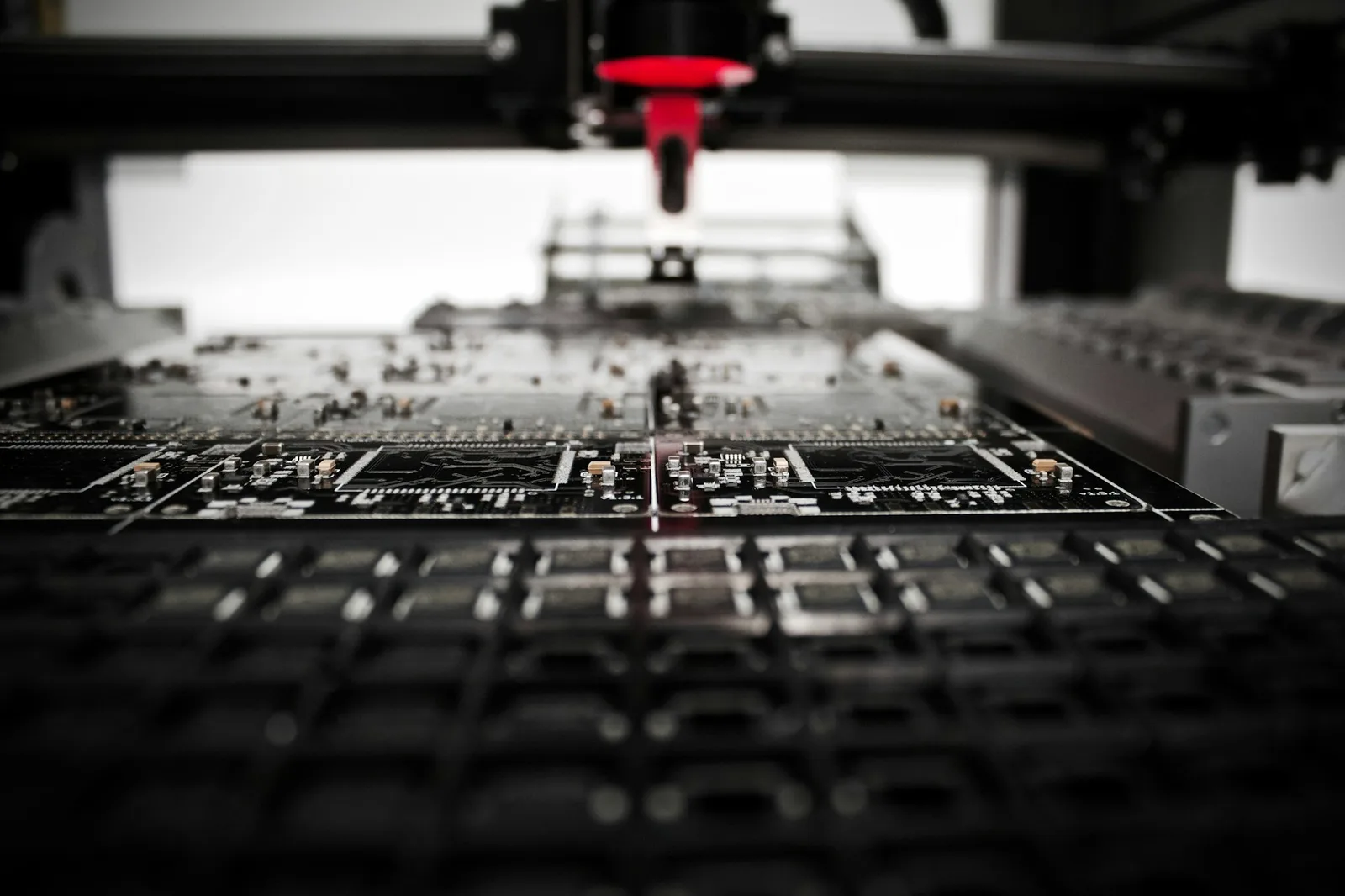
Robotics & Physical AI
Platforms for robotics, control, autonomy and embodied AI — from benchtop rigs to full research cells.
What is Robotics & Physical AI?
Robotics & Physical AI is the field where physical machines sense, decide and act in the real world. It combines control systems, mechatronics and machine learning so robots can move, manipulate and adapt — the foundation for teaching, research and embodied AI.
From Control to Autonomy.
We design and integrate robotics and physical-AI environments for teaching and research — controllers, manipulators, mobile platforms and the software to program and validate them.
Our role is not simply to sell products — we help you select, design, integrate and support the complete environment.
Right technology
We help you select what actually fits your goals and budget.
Complete design
The full solution — hardware, software, space and workflow.
Managed integration
Installed and commissioned to work as one from day one.
Long-term support
Maintenance, training and upgrades for many years.
Who uses robotics platforms
Robotics and physical AI work looks very different by sector. These are the markets we most often design and integrate platforms for.
Universities & Research
Robotics, control and autonomy research with reproducible experimental platforms.
Technical Education
Teaching labs for mechatronics, control theory and hands-on programming.
Manufacturing & Automation
Prototyping and validating automated cells, handling and inspection tasks.
AI & Physical AI Labs
Training and benchmarking embodied agents on real hardware.
Automotive & Mobility
Autonomous driving research, sensor fusion and vehicle control testing.
Defence & Security
Unmanned systems research, teleoperation and mission-rehearsal platforms.
From Human Motion to Robot Intelligence
Physical AI connects artificial intelligence with machines that perceive, learn and act in the real world. One powerful way to teach these systems is through human demonstration — capturing how people move, manipulate objects and perform tasks, then using that data to train and validate robotic behaviour.
DevinSense combines technologies for human motion capture, dexterous hand tracking, teleoperation, simulation and physical robotics into connected Physical AI research environments.
Human movement and interaction
Record tasks or teleoperate robots
Generate datasets and train policies
Train and evaluate virtually
Transfer behaviour to physical robots
Measure real-world performance
OptiTrack + MANUS + Quanser provide complementary technologies across the Physical AI workflow.
Technologies for Physical AI
Physical AI requires more than a robot. Reliable workflows combine sensing, human demonstration, simulation, intelligent software and physical validation. DevinSense brings together complementary technologies for each stage of that process.
Ground Truth for Robotics
Measure movement in the physical world with high precision.
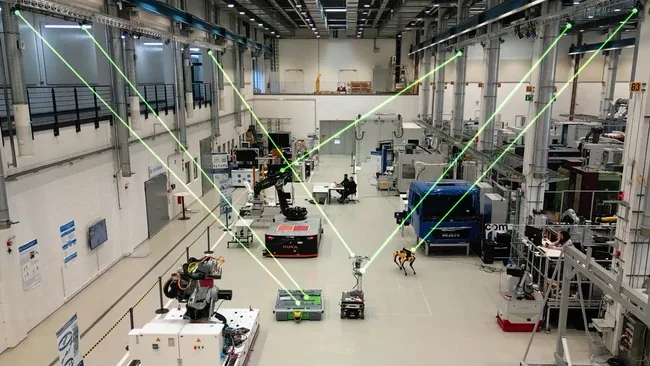
OptiTrack optical motion capture provides precise, low-latency 6DoF tracking for robots, people and objects. In robotics and Physical AI environments it can provide external ground-truth measurement for development, navigation, control and validation.
OptiTrack currently positions its robotics technology around sub-millimetre ground-truth tracking for ground vehicles, aerial robots, robot arms and humanoids, with published positional error below 0.3 mm and rotational error below 0.05°.
Human Dexterity for Robot Learning
Capture detailed hand movement — or directly teleoperate a robot.
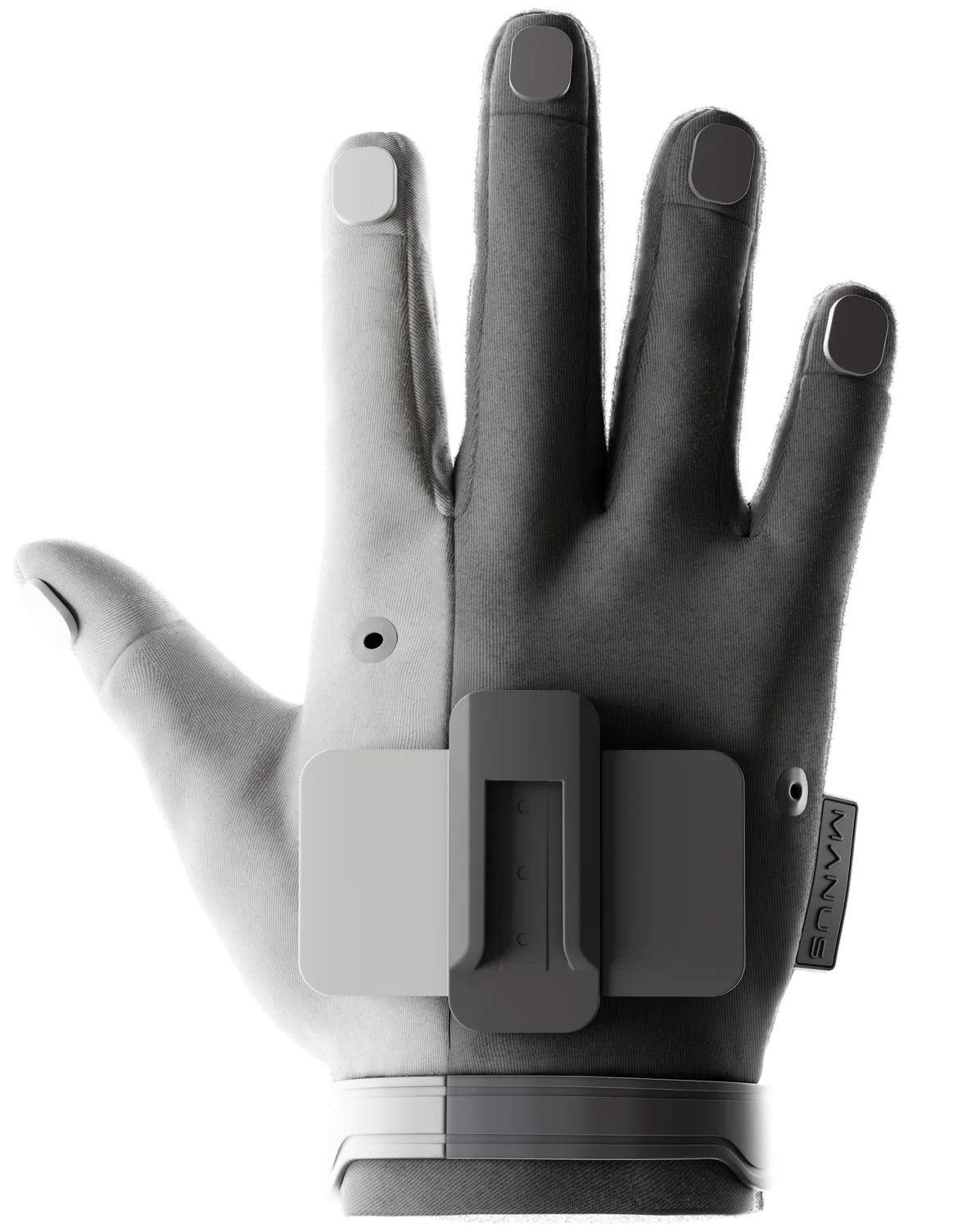
MANUS gloves capture detailed hand and finger movement without optical occlusion, making them particularly useful for dexterous manipulation, human demonstration and robot teleoperation.
High-fidelity hand data can be mapped to robotic hands in real time or recorded as demonstration data for imitation-learning and Physical AI workflows.
MANUS currently presents its robotics offering around egocentric data collection, physical teleoperation and simulation-based policy training. Its gloves capture a full 25-DoF hand pose without optical occlusion, while MANUS Core provides C++ and ROS 2 integration. MANUS is also supported in NVIDIA Isaac Teleop / Isaac Lab workflows.
Why teleoperation matters
Instead of programming every movement explicitly, a human operator can demonstrate a task by controlling a robot naturally. The recorded motion and interaction data can then become training data for imitation learning and other robot-learning workflows.
MANUS documents this exact type of workflow for dexterous robotic hands, where human joint transforms are mapped to robot motion and used for teleoperation and imitation learning.
A Complete Physical AI Research Environment
Move from models and simulation to real robotic hardware.
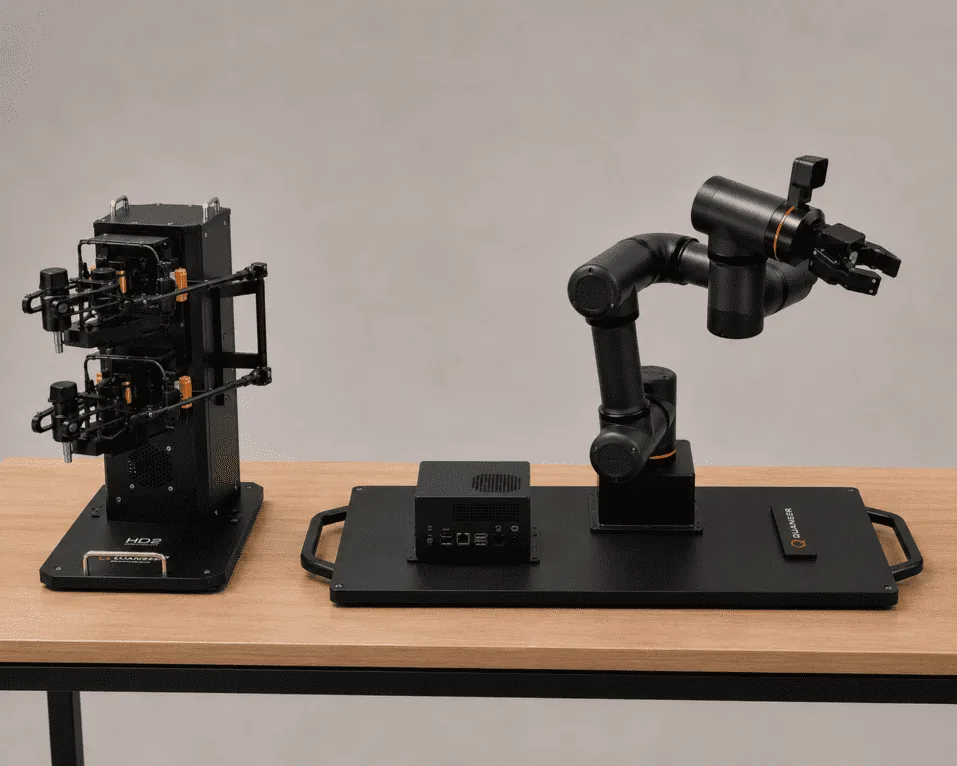
Quanser's Physical AI Lab is a turnkey research environment designed for end-to-end workflows in traditional robotics, applied AI and Physical AI.
The platform combines QArm Research, NVIDIA-based QBrain edge computing, a Haptic Robot for human-in-the-loop control and imitation learning, force/torque sensing and ready-to-use research examples.
This closely follows the supplied Quanser Physical AI material, which describes a connected pipeline where researchers can study how robots perceive, decide, move, interact, learn and validate intelligent behaviour on physical hardware. Quanser's current product page confirms that the Physical AI Lab includes QArm Research, QBrain, QUARC Complete, Haptic Robot, force/torque sensing and end-to-end examples, with support for NVIDIA Isaac, ROS 2, Python, C++ and Simulink.
Sensors & data
AI & imitation learning
Digital twins & NVIDIA Isaac
Physical robotic hardware
NVIDIA Isaac · ROS 2 · Python · C++ · MATLAB / Simulink · Quanser Interactive Labs
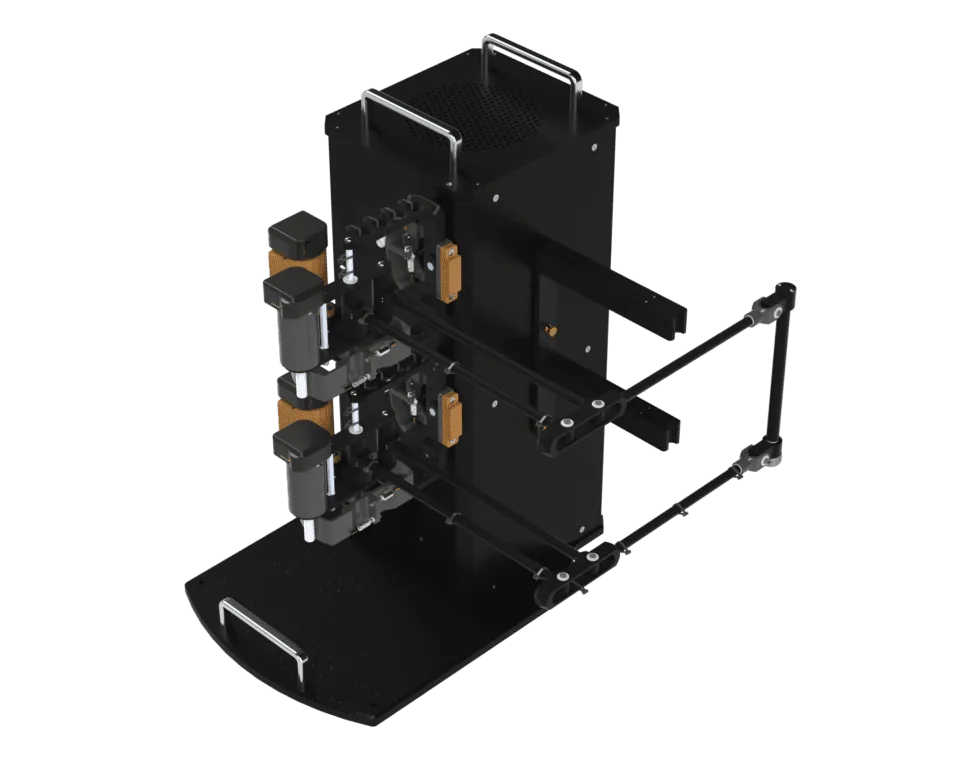
Human-in-the-loop control
Quanser's Haptic Robot enables teleoperation, human-in-the-loop control and imitation-learning research as part of the Physical AI Lab.
Building a Physical AI Environment
Physical AI projects rarely depend on a single technology. DevinSense helps combine sensing, human demonstration, robotics, simulation and software into an environment designed around the research objective.
Define the workflow
What should the robot perceive, learn and perform?
Select the technologies
Motion capture, hand tracking, teleoperation, robotics and simulation.
Integrate the environment
Hardware, software, networking and data pipelines.
Support the platform
Installation, training, expansion and long-term technical support.
Questions we receive before we start a project
If your question is not answered here, ask us directly — most projects begin with exactly this kind of conversation.